
HS methodology
Through the common language of the Circumplex the Human Synergistics Integrated Model links culture and leadership in a way that allows individual managers and leaders to understand how they are perpetuating the current state through their thinking and behaviour.
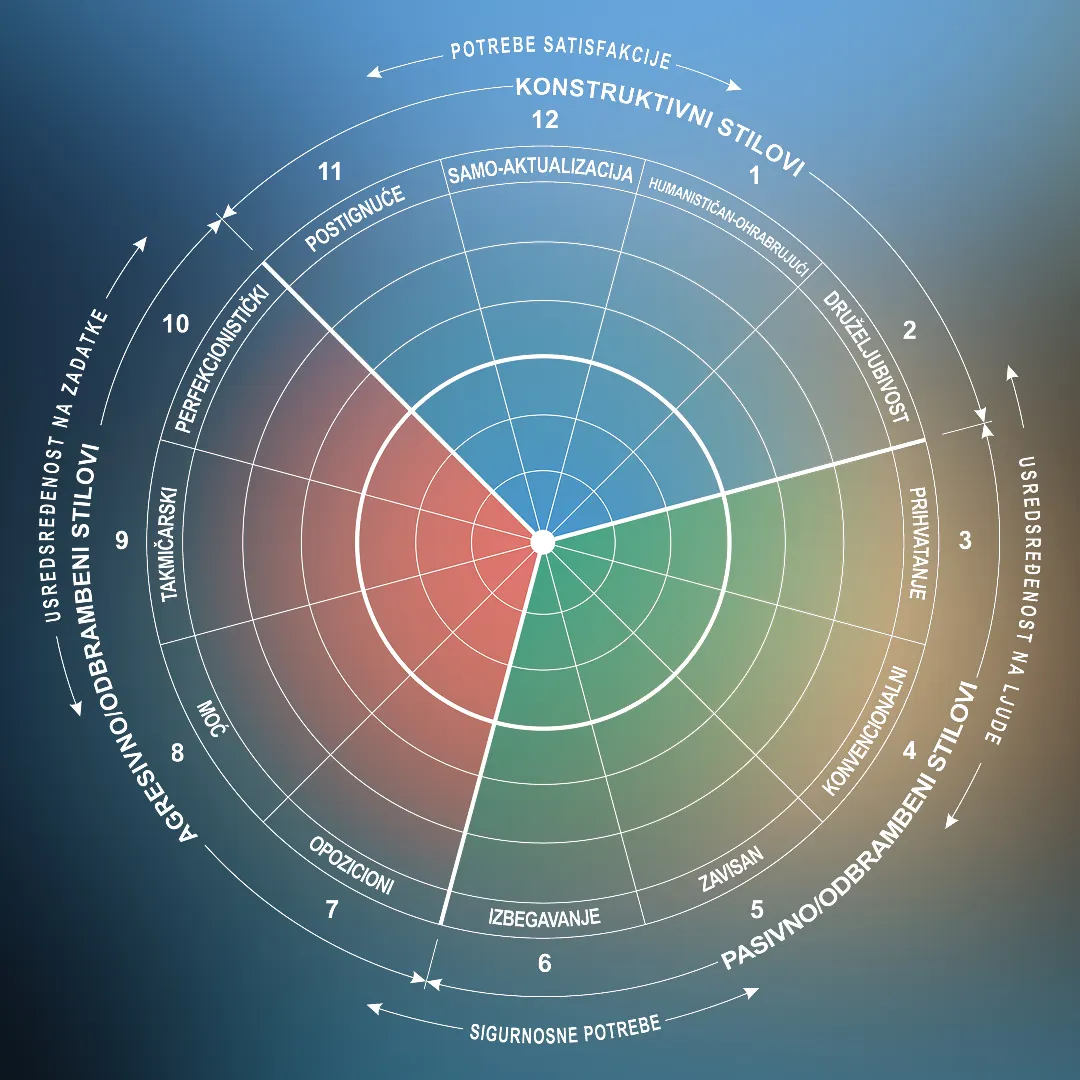
Human Synergistics has developed a methodology based on the circumplex.
Human Synergistics instruments go through beliefs, teams, leadership philosophy, organizational culture and show us that everything is interconnected. The way people behave, how they are led, how organizations work are based on beliefs, and Human Synergistics methodology helps you pass through several layers with the same conceptual model.
Benefits of culture diagnosis
Culture diagnosis gives you quantitative and qualitative data about:
The current culture of the organization and the way people behave at work
The way the structure of the analyzed organization is perceived
The causes that determine organizational culture
The effects that the current organizational structure and culture generate?
The aspirations of the employees (related both to the work environment and to the leaders of the organization)
All this information will be clear, coherent and explained in the diagnosis report.
Ways of diagnosing culture
Culture diagnosis is based on two main approaches
Structure of the organization
The way the organization works and is organized, what is the strategy, organizational chart and all processes and procedures of the organization
Organizational culture
Aspects related to how people interact with each other in the organization and how they do their work
The long-term results of an organization depend on the repeated behaviors of employees. The intensity of these behavioral norms gives the organizational culture. If an organization aims for certain outcomes in the future, it should ensure that people’s behavioral routines support those aspirations and do not hold them back.
The model we use when we diagnose culture is called “How Culture Works”
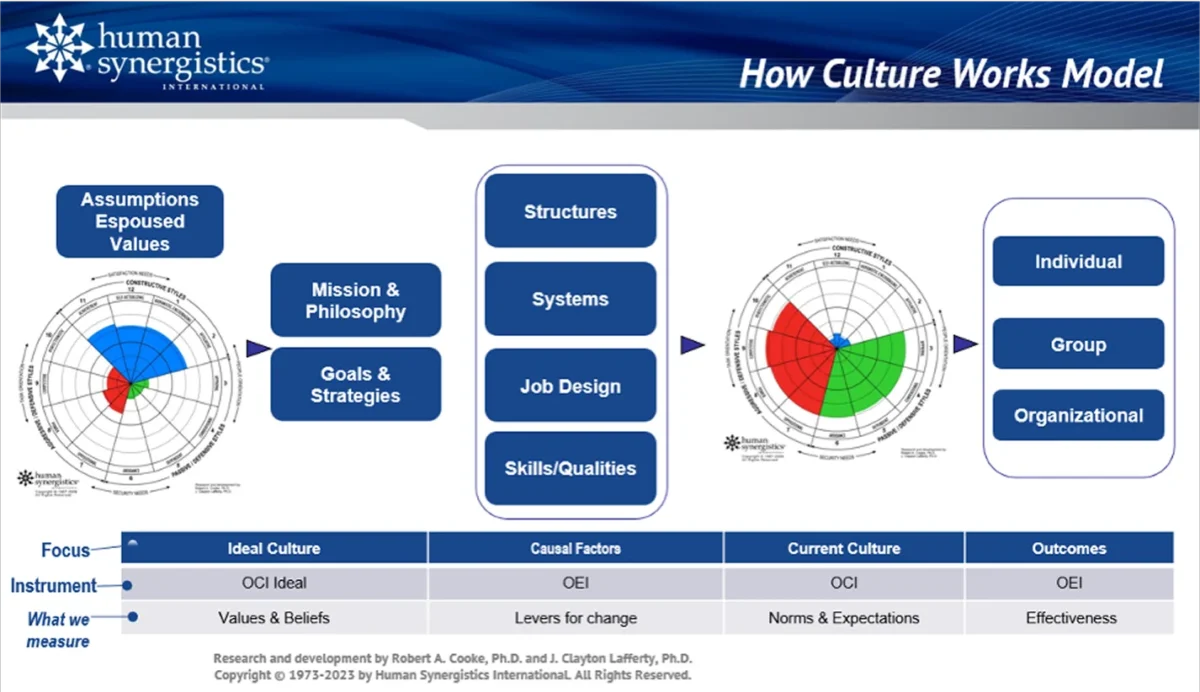
Following the completion of the OCI and OEI inventory by the organization’s employees, a diagnosis report will result detailing the model above. Specifically, understanding how culture and climate work together means understanding 4 separate but interconnected components:
1. Ideal Culture


2. The causal factors or levers of change
3. Current culture

4. Consequences (impact of culture).
We analyze the consequences of culture at the individual (such as commitment), group (such as teamwork), or organizational (such as external adaptability) levels. These dimensions show us how the organization is performing. (12 sizes grouped into 3 categories). Consequently, information regarding the commitment is included.